Basement Flooding Cleanup in Decatur, GA
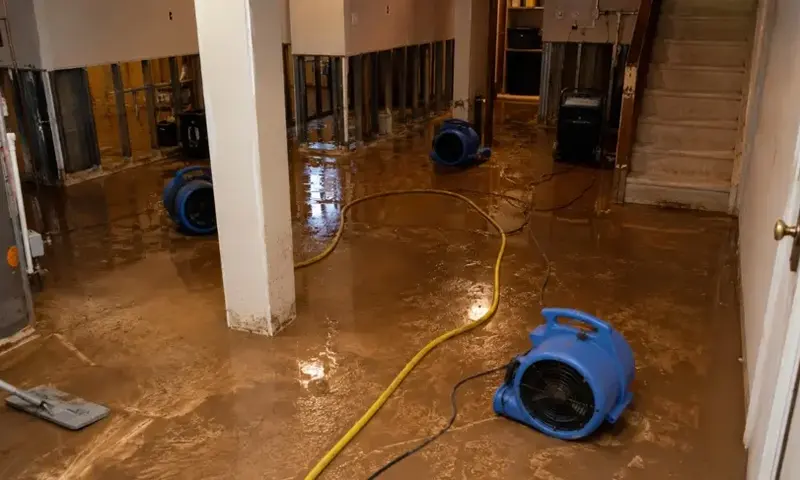
On Decatur's sloped lots, the basement is where storm water, a failed water heater or a sewer backup ends up. The extraction crew pumps it out and the drying team dries the slab, walls and framing.
(888) 532-4616Get basement flooding cleanup started in Decatur- Truck-mounted extraction
- LGR dehumidification
- 24/7 dispatch
What to do first about basement flooding cleanup in Decatur
- 1
Stay off wet floors
Do not walk into a flooded basement if outlets, cords or appliances are under water.
- 2
Kill the power
Switch off the basement circuits at the panel if it is dry and safe to reach.
- 3
Find the source
Note whether the water came from outside, a floor drain, the water heater or a washer.
- 4
Photograph and call
Photograph the water depth and damaged items, then call for extraction.
How basement flooding cleanup is handled in Decatur, GA
Every step follows the IICRC S500 drying standard, and each one leaves a record for the claim file.
- 1
Map the moisture
The tech who does the walkthrough maps moisture with pinless meters and thermal imaging before any equipment goes down, and sets the category and class of the loss.
- 2
Extract
The extraction crew pulls standing water with truck-mounted extraction, so the water leaves the building instead of moving into the next room.
- 3
Dry the structure
The drying team sets air movers to each room's evaporation load and runs LGR dehumidifiers, or desiccants for Class 4 materials like heart pine and plaster.
- 4
Verify dry
Most crews pull equipment only when wet materials read within 2 to 4 points of a dry reference material in the same house, with daily readings logged for the claim file.
What does basement flooding cleanup cost in Decatur, GA?
In Decatur, GA, basement flooding cleanup typically runs $2,000 to $6,000 for a clean-water loss in an unfinished or partly finished space and $6,000 to $15,000 or more for a finished basement with drywall, carpet and Category 3 water.
Unfinished, clean water
$2,000 to $4,000
- Pump-out and extraction
- Slab and block drying
- Dehumidifiers and readings
Finished basement
$4,000 to $9,000
- Carpet, pad and flood cuts
- Wall cavity drying
- Contents moved
Sewage or runoff
$9,000 to $15,000+
- Category 3 removal
- Antimicrobial and HEPA
- Full structural drying
Ranges move with the water category, the square footage, the material class and how fast drying started. For a planning number, try the Decatur water damage cost calculator.
Full basements are less common in Georgia than up north, but Decatur has plenty of daylight and partial basements on sloped lots, especially in Clairemont-Great Lakes, Decatur Heights and North Decatur. They are finished more often than not, which means carpet, drywall and furniture are sitting right where the water collects.
Why Decatur basements take on water
- Heavy rain on red clay that cannot drain fast enough, pushing water against the uphill wall
- Clogged or undersized gutters and downspouts dumping water at the foundation
- Water heaters and washers that fail in the utility corner
- Sewer backups through a floor drain when a root-cracked lateral or a public main backs up
How a flooded basement is cleaned up
The extraction crew pumps out standing water first, then extracts carpet and pad. The tech who does the walkthrough sets the water category from the source: clean from a supply line, gray from a washer, black from a sewer or outside runoff. Finished walls get a flood cut above the wet line, wet insulation comes out, and the drying team runs air movers and LGR dehumidifiers sized to the space. Slab and concrete block walls hold water, so readings run daily until they reach the drying goal.
Trade fact: concrete gives up water slowly. A basement slab can look dry on top while the readings say otherwise, which is why equipment stays until the numbers match a dry reference.
After the dry-out
Most repeat basement floods come from grading and gutters rather than the house itself. Extending downspouts, regrading soil away from the wall and keeping window wells clear go a long way. The FEMA flood insurance pages explain when outside water needs flood coverage, and UGA Extension publishes home drainage and landscaping material for Georgia soils. If the water came from a floor drain, see sewage backup cleanup; for water under the house instead, see crawl space water damage.
Where the Decatur basement flooding cleanup crew works
The Decatur restoration crew covers the whole city, from the Square, Oakhurst and Winnona Park to North Decatur and Medlock Park, and south through Belvedere Park, Candler-McAfee, Panthersville and the Snapfinger corridor.
See every neighborhood and ZIP codeRelated water damage services in Decatur
Basement Flooding Cleanup questions in Decatur
Short answers to what Decatur homeowners ask most about basement flooding cleanup.
Talk through the damage with a Decatur proWhat is the first thing to do in a flooded basement?
Stay out if outlets or appliances are under water, shut off power at the panel if it is safe, find the source, photograph the damage and call.
Does basement carpet have to be thrown out?
Pad almost always goes. Carpet from a clean-water leak caught early can sometimes be saved; carpet touched by runoff or sewage is removed.
Why does my basement flood only in heavy storms?
Usually the water is coming from outside: gutters, downspouts and grading send runoff at the wall faster than red clay can absorb it.
How long does a basement take to dry?
Four to seven days is typical once finishes are removed. Concrete and block walls can take longer, and readings decide when equipment leaves.
Is basement flooding covered by insurance?
It depends on the source. A burst pipe, surface flooding and a sewer backup are often treated differently. Coverage depends on your policy, so it is worth checking with your own insurer.
Do I need a sump pump?
Some Decatur basements benefit from one, especially on low lots near creeks. A drainage contractor can say whether grading or a pump is the better fix.
Basement Flooding Cleanup in Decatur? Get the drying started today.
Every hour of standing water pushes it deeper into subfloor, drywall and framing. The Decatur restoration team works around the clock.